Friday, 30 August 2013

A good year for butterflies


It's not been a bad summer, has it? Dawn till dusk sunshine, warm enough to swim in the sea, cool beer, cold ices, no irritating long flights to suffer - all in all a good year to stay at home.

To answer last year's fretting about the lack of bugs on the windscreen, some muggy drives have even had these, although the report of a clouded yellow squished against the screen was rather unnecessary.


And butterflies have appeared in (relative) profusion. Buddleias are covered with whites and aristocrats while the herbs and grasslands are alive with blues and skippers.

The biggest news was, of course, the discovery of a veritable colony of long-tailed blues on Kingsdown Leas, with around seven adults and 47 eggs recorded, plus an egg in each of the villages of Kingsdown and St Margarets. The adults would have been blown north from the Mediterranean area on the warm "Spanish plume" wind in early August, along with many other unusual insects. The arrival even made the national press.

The eggs were laid on broad-leaved everlasting pea which grows profusely on the clifftops. The six-week life cycle of this butterfly is continuous throughout the year, so we may see an emergence of adults in late September if weather permits, but it is not possible for them to repeat the cycle through the winter.

I caught a brief glimpse of a female before being submerged beneath a pile of camera-toting twitchers, but for the record here's a photo taken in Rhodes a couple of years ago, in more familiar surroundings (note the pea leaves behind).

Also just for the record, here's a selection of sundry pics taken this summer, mostly without the tedium of commentary.


I like woolly thistles. I shall devote the rest of my life to spreading their downy seeds.


After all the work done of the catastrophic disappearance of the once-common small tortoiseshells, can any of the experts now explain why they have returned this year in such profusion? Have they also flown across the water, or are they our recovering native population?  Will we again see them in sheds and garages in the winter?
[ Answer from BTO: This year’s boost for Small Tortoiseshells is probably due to three reasons. Firstly, the long period of dry, hot weather has been good for both butterflies and the flowering plants they feed on. Secondly, there may have been an influx of immigrant Small Tortoiseshells from the continent, benefitting from the warm weather and boosting our British population. Finally, it is possible that the parasitic fly Sturmia bella, which is thought to be a partial cause of the overall decline of Small Tortoiseshell, is at a low in its population cycle.]


 The undersides of some butterflies are unjustly ignored.


In other news......

Autumn gentians have appeared at Lydden, but I've not seen any autumn ladies' tresses yet.
[Stop press - news just in..... tresses seen on a lawn in Kingsdown.....]
Dwarf elder is in flower beside the A2 by Brenley Corner.
In common with many plants, sea heath seems to have had a good year, with its patches beneath Shakespeare Cliff seemingly doubled in size. The climb up to see it is, however, getting more difficult [it's your age!]

And on the bird front, there's been lots of interesting migrants (all of which I have missed) and although a visit to Oare ticked my first UK cattle egret.....
...I failed to see the long-staying Bonaparte's gull. Oare is lovely in the late summer sunshine, although when I shared my affection for the place to a passing birder he replied "not much about though". Good grief, man.

Wednesday, 24 July 2013

Crecy again - what a boar

It's good being able to plan a week's holiday at the drop of a hat, and to chose where to go according to the weather forecast. So when the forecast is for heat, it's best to go to the forests, within easy reach of the coast, and Crecy forest fitted the bill nicely.
Strapping the bikes on the back of the car, we drove slowly down the N roads via La Coupole [impressive restoration, museum, shop and surrounding chalk grassland] and Azincourt [unimpressive, sorry] to our favourite B&B just 100m from the forest.

We rode into the forest at leisure in the mornings and evenings, and there was always something interesting to see, especially as many animals seem to like the quiet roads as much as we do.

It is the habit of white admirals to rest on the road (possibly feeding on squashed slugs) .....


.... and sometimes they come to grief themselves.
 
While watching the white admiral, sharp-eyes spotted another butterfly nearby, which proved to be a newly-emerged purple hairstreak.


We saw plenty of roe deer beside the road or crashing through the forest, but this little family allowed a stealthy approach from downwind, until they chose to saunter off to feed.

We cycled until it got dark in the evenings, when more insects and animals appeared. What's that crossing the road down there?
 

It was a herd (or sounder) of wild boar - about eight adults and 20 piglets. We kept our distance, of course, as they are impressive beasts.

 
And when it was almost dark a slim shadow was sighted, in the area by pine trees where most of the slugs had been seen.  

Fortunately it ran up the road towards the camera and confirmed its identity as a pine martin, a rare animal almost everywhere and apparently unknown in this forest or indeed in the Somme area according to Picardie-nature.

 
Moving on from our Crecy base, we stopped at a town called Long and enjoyed the typical French riverside habitats.


This edible frog should take care - we later ate at the restaurant in town and I'm sure they would enjoy preparing frogs' legs. Incidentally, the Le Comptoir Bleu restaurant, overlooking the Somme, is one of the best I've visited, and is well worth a trip -great food, service, ambiance and views, not to mention good value.


And so to the real reason for the French trip - Parc Asterix which was a real blast. I have been meaning to take the kids there for 20 years, but eventually they took me!


Friday, 28 June 2013

New things in old places

A new tick for the Kingsdown rifle range! The first bee orchid I've seen there, to add to the early spiders and pyramidals. It seems to be a good orchid year with bits popping up all over.

On a very different site by the lakes between Chartham and Chilham we saw a host of bee orchids....
 

....and a veritable forest of meadow vetchling, which I've previously only seen as individuals peeking out from long grass on chalk. This habitat of gravel pits doesn't make you think of chalk downland, but perhaps it's rich from dumped soil in the past.

Beside one of the fishing scrapes was a length of fencing, which held half-a-dozen dozing lizards. It wasn't warm despite occasional sun, so their usual skitterishness was constrained - they just lay there and posed.

Back on Walmer beach in the evenings we have seen four painted ladies, lovely butterflies which I like for their undersides ....

....as much as for their spectacular upper wings. No cloudies yet but I'm hoping maybe this weekend?


The Western Heights hold some excellent chalk habitat with a carpet of common spotted orchids and a good population of small blues, but this year there's an additional sight ..... early gentian Gentianella anglica.

 
OK, it looks just like autumn gentian Gentianella amarella but it's interesting to see it among the lush growth of early summer.
 
And finally, a photo of a "what's that" plant on the Lewes Downs, which I subsequently realised was hairy rock-cress Arabis hirsuta which has an eastern outpost between Kingsdown and St Margarets, but I've not seen it here. More searching required!

Saturday, 22 June 2013

Herbaria


 A selection of old writings has come to my attention, providing interesting information about the state of nature in our area in times gone by. 
For example Cowell's A Floral Guide for East Kent, 1839. http://tinyurl.com/mcx63yk which lists a host of information especially from the mysterious and hard-working "Miss H".  One example that I followed up was the burnt tip orchid, now sadly lost from Kent but previously recorded under Kingsdown:


and "near South Foreland Light Ho." The National Trust's purchase of the cliff top there money well spent if it reappears there again!

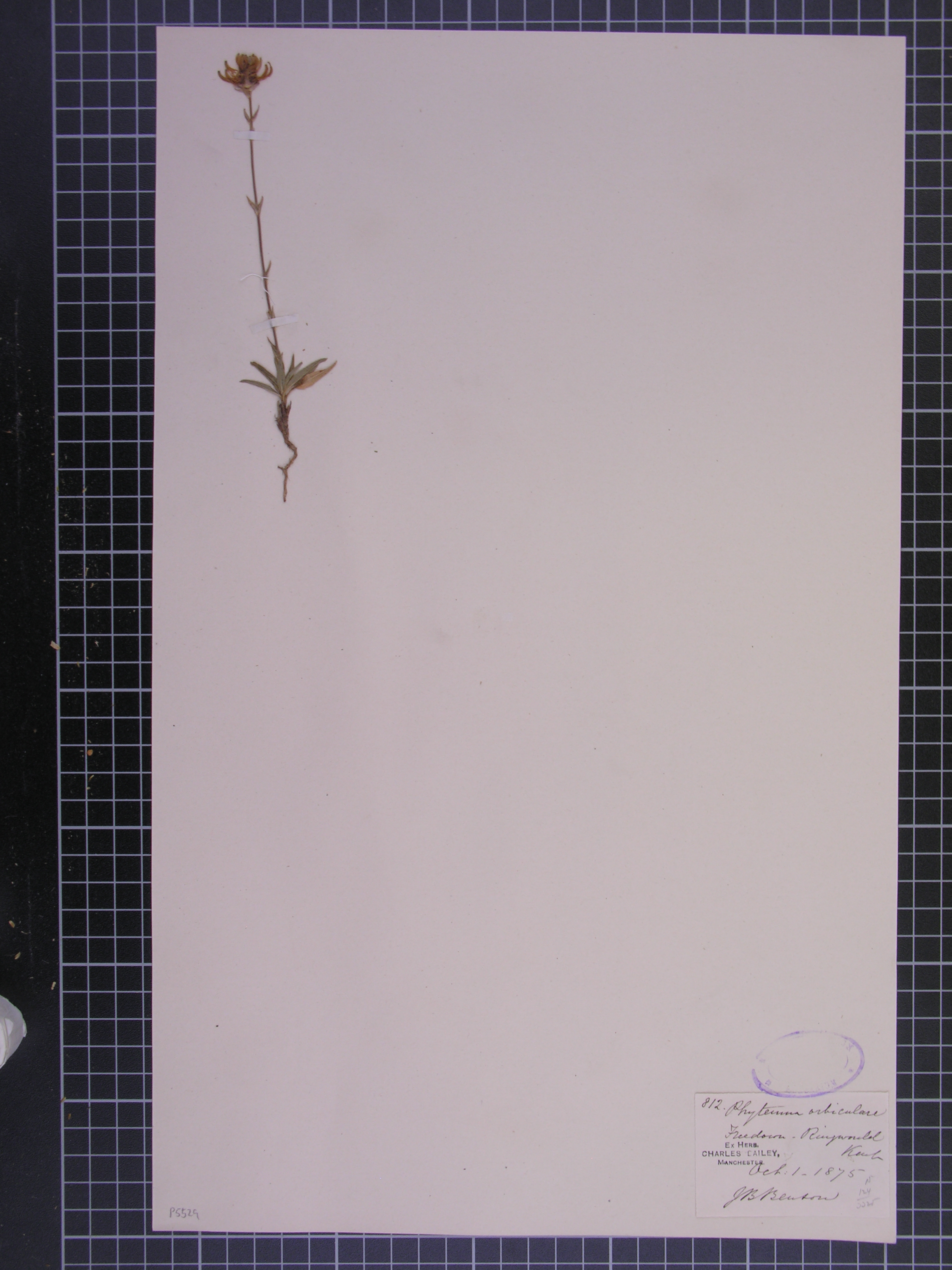
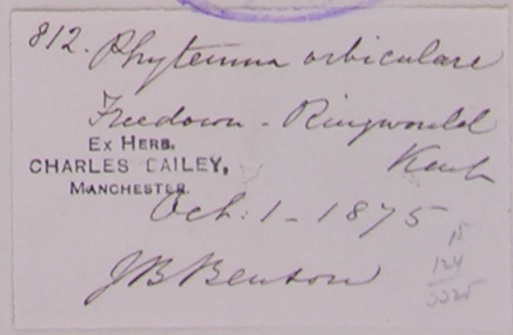
A fascinating catalogue of herbaria is in the herbaria United part of the BSBI's site, showing innumerable specimens collected from the land in the past couple of centuries. Who would believe that round-headed rampion was to be found on the Freedown between Ringwould and Kingsdown in 1875!


The collection of plants was, I suppose, similar to our obsessive photography but presumably had an impact on the continued survival of the species, especially as the rarer the plant the more likely to be pluck'd untimely from the sward. Nowadays we are more likely to trample or lie on nearby plants, which is bad enough.

Other species of interest in the Herbaria include
  •  Nottingham catchfly (undercliff between Kingsdown and St Margarets in 1872 - when the undercliff was not yet underwater, presumably);
  • sea pea on the beach at Kingsdown and Walmer, whereas it's now only found at Walmer;
  • rock stonecrop, an introduced plant, but obviously introduced before 1925;
  • sand catchfly at Deal, now only at Sandwich Bay; and
  • stinking hawk's beard, now only just hanging on at Dungeness.
    I've not seen burnt tip orchids in Kent (few have) but we made a foray to the Sussex Downs near Lewes to try to find it. It took some doing, with many hours tramping the wrong part of the reserves, but eventually we caught up with hundreds of them on a south-facing bank.


Part of the enjoyment of the search was walking over the downland which is subtly different to our own. Generally more grazed and springy, but with similar plant species of course. Except that they still have round-headed rampion and burnt tip orchid.

As the sun went down on our second walk, large numbers of newly emerged common blues came to roost on convenient shrubs and grasses, while the occasional pair enjoyed the romance of the occasion.


If anyone has any other references to old records of the area, it would be good to see them!