Friday, 22 August 2014

Further fauna and flora from the far west


The peace and quiet of Skokholm makes it easy to concentrate on the fine details of the place - the geology, geography, weather, flora and fauna have all come under minute scrutiny over the years. We tried to contribute our own little bits, but this was of course mostly confirming what has already been recorded rather than making new finds.

I followed the long-established but lapsed butterfly transect, which was not difficult so long as one can count to 100 for the meadow browns. Apart from the odd small copper and peacock there was little else, although looking back on earlier counts it was clear that a greater variety had been present a decade or so ago, including good numbers of dark green fritillaries that bred on the abundant wild pansy. Apparently they were over-collected, and breeding ceased. This raises the question - should they not be reintroduced? I'll follow it up.

Man's involvement in the island's fauna is clear amongst the rabbit population, as Lockley the farmer (before he became Lockley the conservationist) brought in different breeds in the hope of marketing their fur, leading to a legacy of chinchilla-bunnies....

....... black bunnies.......

..... as well as normal bunnies.


The old red sandstone provides a lovely background to the sparse flora


 A few stream beds are lush with unusual plants, including sea milkwort, the bizarre allseed,bog pimpernel and lesser skullcap.

Scarlet pimpernels


The sea was warm enough for swimming, and was especially welcome as there are no baths or showers on the island.  The grey seals kept me company.


Back on the mainland, the glorious sun turned to Welsh rain, but didn't dampen the spirits because Pembrokeshire is so beautiful.


This is a red kidney vetch - weird.
 
When the sun reemerged, it brought out silver-studded blues- a very welcome addition to my life list. They are just gorgeous. 


And a grayling posed for a series of photos too :-)

Sunday, 20 July 2014

Birds on Skokholm

Not a bad place for a bird hide!

Overlooking cliffs where guillemots and razorbills "nest" away from the prowling gulls. Unfortunately, evolution has decreed that the chicks must jump/fall/bounce down into the sea, where other perils reside. Then they float out into the Atlantic with father razorbill or both parents if a guillemot. How did their ancestors develop like this? It's a successful strategy, though, as many hundreds breed here.


Even more astonishing, though, is the life history of the Manx Shearwater. 45,000 pairs nest in burrows across the tiny island but apart from corpses you don't see them in the day. In the evening, though, rafts build up as the birds that have been out to sea all day congregate, waiting for the comparative safety of darkness.
Then, if the moon is not too bright, they fly in and somehow find the right burrow.

If they don't find it, they are at the mercy of the gulls that are waiting for them, as their short legs make it difficult to move around on land. To help them find the burrow, the mate underground screams its banshee call. Sleeping at the observatory can be difficult as they are right outside.

The wardens are, of course, continuing the ringing process that was started when Skokholm became the first observatory in 1933.

The information gradually gained from the recording process is astonishing.... Manxies have been ringed and recaptured showing they live until at least 54 years old..... they fly 5 million miles in that time, between nest sites in the western British Isles and their winter feeding grounds off the coast of Brazil and Argentina...... and the parents leave the young in their burrows, and the fledglings eventually emerge and fly off to the south Atlantic on their own. And find their way back to the same island a couple of years later. I'm staggered.


The wardens and assistants also carry out ringing programmes on nesting storm petrels, auks, lesser black-backs and great black-backs (above) with much rock climbing.
There are also Heligoland and mist net traps that are no doubt full and fascinating in the migration times, but when we were there seemed to be occupied mostly by the handful of sedge warblers nesting nearby.


Families of choughs and ravens added to the enjoyment of cliff walks.


And of course there were puffins.......
.

Thursday, 17 July 2014

Stay on Skokholm

"Stay on Skokholm" is not a description, but an imperative. You have to stay on Skokholm because, unlike Skomer, there are no day trips. The fishing boat leaves you on Monday morning and you're there until Friday. Or vice versa, for a weekend stay. Unless the weather prevents landing, in which case you wait....

We were fortunate to get a late cancellation with less than a week's notice so we rearranged work commitments and drove west to the far tip of Pembrokeshire for the 8.30am crossing. About 15 visitors can stay in the newly-updated accommodation which was comfortable in the dry, warm weather, and getting to know strangers who have similar interests was one of the delights of the stay.


The island is only about 1 mile long by half a mile wide and is owned by the Wildlife Trust of South and West Wales, and administered by the Friends.  A well-stocked library and a ringing shed completes the observatory which has recently received accreditation again after a break of over three decades, and is staffed by two wardens and three volunteer assistants, who were charming, knowledgeable and good company.
Richard and Giselle write a good blog http://skokholm.blogspot.co.uk/, and are assisted by temporary volunteers Will (storm petrel expert), Dean (marine biologist) and Bill (pan lister and expert in everything else). The photo below shows Bill and Dean calling into storm petrel burrows and listening for replies, presumably under the delegation of Will.
 Skokholm is famous for its large populations of Manx shearwaters, storm petrels and lesser black backed gulls, of which more later.......

and puffins of course.

Wednesday, 25 June 2014

In the rough


Before we notice it, spring has gone and summer has arrived, ushered in by long days, warm nights and the first meadow browns and marbled whites.


The Leas at Kingsdown is a good place to see roosting marbled whites, often head down on the vegetation, and this year the grass here and elsewhere is thick and lush - pity the poor golfers finding their ball in the rough. Also thriving here is the naturalised everlasting pea, so if any long-tailed blues would like to fly over again, there's plenty of food here. Or if any egg collectors have any eggs collected from elsewhere?


Elsewhere, orchids are flourishing in the most unusual of places. Along the A20 and M20 around Folkestone and on the roundabouts there are hundreds of pyramidal orchids, while common spotted orchids on the Western Heights seem to be in thousands.


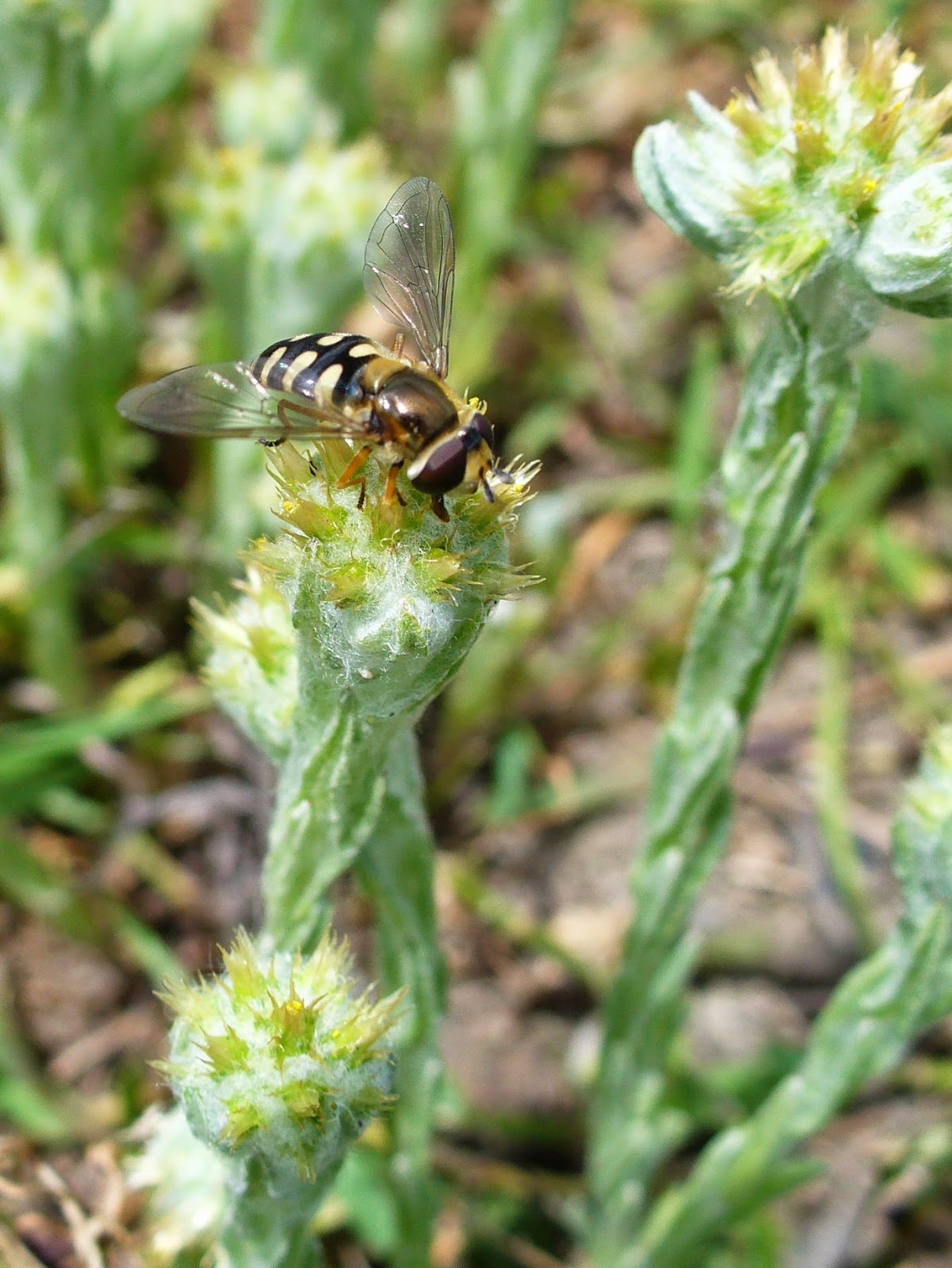
 In the dryer areas of the Folkestone area, however, profusion of another sort is seen - lawns of common cudweed line the A20.

A new plant for me was found under the Eurostar bridge..... fiddleneck Amsinckia micrantha which is a wool shoddy escape, and very infrequent.

Monday, 2 June 2014

So little time, so much to do

It's that dashing time of the year when spring is bursting into summer, and all the joys of the season emerge at once. The temptation is to dash around seeing all the favourites before they fade, fly away or die.

Tick them all off again, even though you've seen them every year for the past three/ten/fifty.
It's mid-May..... I must check on the adonis blues / late spider orchids / nightjars....... even if they are a long drive away on someone else's patch.

Resist the temptation. There's good stuff on your doorstep, or at least there is here, and we know we're lucky in this corner, surrounded by downland, cliffs, the sea and marshes. And the suburbs of Dover, where the Old Park Hill area is being regenerated to bring back the diversity that has (temporarily) been lost after grazing ceased a couple of decades ago.


Or the hills above the housing estates of Folkestone, which are breaking out into a beautiful tapestry of colour as orchids, horseshoe vetch, rock rose and the rest .......


.....and capping each hill top, a plant or two of common gromwell.
At first glance it was easy to see that there were many burnet moth cocoons on grass stems, glaucous sedge spikes and (notably) the fence wires.
 On closer inspection, there were also many, many caterpillars preparing for that stage of the life - they were everywhere. Sit down with care.


Other trips revealed
- three calling cuckoos including a bubbling, egg-laying female on Minster marshes, where at least five nightingales gloriously sang, and occasionally showed themselves - 


                                                   - a tiny grass snake at Sandwich Bay -

- where the "wild" lupins seem to be spreading inexorably. I dislike lupins in gardens, but these seem right in the big-sky marshes - 


- Nottingham catchfly above Dover docks, subject to an informal survey this year -

And OK a bit of plant-twitching....... greater butterfly orchid at Park Gate Down (the Mecca) and an evil sprite masquerading as a fly orchid.