Tuesday, 24 January 2012

Sprattus sprattus sprattus

A little Birder told me that "the sea is alive with auks!" on Saturday, but as luck would have it I was on the train to London - ain't that always the way!
By Sunday, however, the sea was still alive with auks, and they formed a line of black and white about 400 yards offshore from Kingsdown along the cliffs towards St Margarets, although strangely none were to be seen from Deal pier.
About three quarters of the auks appeared to be Razorbills, constantly on the move to take advantage of the food on offer, while Red-throated Divers joined in the fun and about 170 Gannets exhibited their own specialised way of fishing.It seems that the winter sprat-shoals have arrived in force from their spawning-grounds and have attracted the various predators, including local fishermen who anchored in the middle of the rafts of auks - sprats are now on sale on the beach at £1 a bag, and very tasty too.

The mussel trawlers have departed having done their damage to the seabed, and it remains to be seen how their activities will affect local fish-stocks and catches. The local press has dubbed this "Mussel Wars" which is going over the top a bit, but the livelihood of the last remaining commercial fisherman in Deal is at stake.


Among the dull common Rock Pipits on the rifle range appeared a rarer bird - a Meadow Pipit, the first to be seen this year as they seem very scarce.
Some of the sprats were cut up and used to feed the Turnstones, of which there were 13 in total, including a variety of mangled legs. Greenie has called them "Sea Pigeons" which is apt, but they remind me more of starlings in the way they scuttle around and fly.
There seem to be plenty of Common Buzzards around, including a dark one that stands sentinel between the Lydden turnings beside the A2. A much lighter one was seen just to the west of there, looking very debonair.

Wednesday, 18 January 2012

Son of Stumpy

Still the sun shines on our mild winter..... it's a pleasure to be out. The promenade of Walmer and Deal is now my chosen habitat with the gulls, pigeons and turnstones which live on the beach and the pier each winter.
Turnstones breed in the high arctic, of course, and migrate as far south as South Africa - but many seem to winter successfully on our coasts so you wonder why some travel on all that extra way.
The use of geolocators has shown that turnstones that migrate down the Pacific coast fly even farther.... one was recorded travelling from Siberia to Australia for 27,000 km (it went the pretty way) and from Australia to Taiwan non-stop for 7,600km.

One of the turnstones on Deal pier has a damaged foot, but no! it's not the famous Stumpy, who had a damaged right foot. This one has a bad leftie, so has been dubbed Son of Stumpy.
I've got nothing against his right leg, but unfortunately, nor has he.

It seems that having a damaged foot is an occupational hazard for turnstones, as many such-afflicted birds are seen around the coast. This is not such a problem for those scavenging on rocks and sand, as the species use their beaks to forage here. On shingle, however, they seem to use their feet to move the stones in the search for bugs and detritus, and this is not easy if you have only one. Consequently, birds in this habitat make the most of nearby food sources - namely food dropped on the pier.

In Whitstable, the turnstones are tame enough to beg for scraps around the tables of the harbour restaurant - have they no shame?

Last week a fleet of trawlers from Kings Lynn circled offshore, scraping the seabed for small mussels which are then shipped to Spain to be grown on. The local fishermen here are not pleased that our patch is being damaged by these incomers.

On a walk around the block at Kingsdown, taking in the wood, the cliffs and the golf course, few birds were seen, the only ones of note being a few skylarks singing invisibly high. No Corn Buntings, Yellowhammers or Meadow Pipits at all.

The much-discussed unseasonal flowering has subsided with the colder weather, but a swathe of Fumitory brightened up the day.

Tuesday, 3 January 2012

New Year Trundle


The traditional New Year trundle around the south of Kent was blessed by fine sunny weather, and is fully reported by Steve, the Greater Kent Birder, here. The other member of the party, Pete, is twice Steve's size so will henceforth be known as the Greatest Kent Birder. This accolade is a blatant attempt at flattery so I can use some of his photos.


The day started well with the friendly neighbourhood Great Northern Diver in Dover Harbour, accompanied by plenty of Guillimots and Razorbills, and the strange sight of Gannets fishing within the harbour walls, and often flying close overhead.

The recent winds had presumably blown the birds from the North Sea and down the coast, and they were sheltering in the safe haven.


Down to Dungeness via Walland Marsh (Bewicks Swans, Tree Sparrows), and a scan across the sea showed large numbers of sea birds were sheltering here too, in the lee of the point. Closest to the shore were Great Crested Grebes, then a little further out large numbers of Guilliauks with a few Red-Throated Divers fishing among them, then 60-70 Gannets diving on shoals - it could have been the Farne Islands.Birds everywhere on the water; no new day-ticks but we enjoyed the sight as long as the cold kept out. The next tick was a Caspian Gull......
.... then the the RSPB centre to watch Tree Sparrows on the feeders.


Adding Great White Egret, Bittern (yay) and a distant Long-Tailed Duck at the ARC pit, we moved on to Pett where there was little to excite but Brents and White-fronts.


As the sun sank in the west, it was time to watch raptors coming in to roost at The Woolpack -up to eight Marsh Harriers at a time circled in the fading light, with a total of at least 20 birds, but disappointingly no Hen Harriers. A Peregrine and an alleged Merlin flew through, though.


A good days birding with fine company and memorable sightings.


Back home........


The first addition to my non-avian pan-list for the year was a house-tick of this critter, which seems to be a False Black Widow Steatoda nobilis which has brought its family to live by the back door, and lurks there at night.


So the New Year starts.... borrowed camera, broken bins, sunny weather followed by gales and torrential rain......


But life isn't about waiting for the storm to pass, it's about learning to dance in the rain.


Let it be a Happy New Year, whatever it brings.


Sunday, 18 December 2011

Egrets great and small

Picking up on the last post, in which I wondered about the reasons why birds might be found dead on a lighthouse, two bloggers have passed on links to interesting stuff:
http://www.bsc-eoc.org/download/Francis-Jones-light-mortality.pdf reports on photopollution around lighthouses and states that :
Songbirds that migrate at night are attracted to these sources of light, especially under overcast or foggy weather conditions. Birds that are not killed outright by collisions with the light sources can succumb to exhaustion brought upon by prolonged fluttering around a light source or to predation upon individuals in weakened states.

A recent article in Birdguides reports on lights on off-shore vessels attracting an astonishing range of birds including water-rails and bitterns, and well as vast numbers of songbirds, often with fatal results.

And a recent book on British bird observatories reports on collisions at, for example, Bardsey. It is interesting to know that some lighthouses have nearby "safe attraction" lights to lure birds away from the danger, and to a safer landing ground.

On a day-trip to Dungeness to get as far away from shopping malls as possible, I was lucky to see a Grey Heron chasing a Great White Egret around the ARC pit, both landing by the viewing screen. I scuttled around to it and sure enough the Great White was fishing close by - lucky!
LinkIts smaller cousin, the Little Egret, may have been impressed by the size of fish being taken by the Great White, and tried to copy it.
You've bitten off more than you can chew, mate.

In the bright sunshine it's clearly that time again.........
..... which must also be the view of the White Cliffs Ravens which have returned for the third year, and were checking out breeding sites.

Also on the cliffs, having started their season very early, were two Carline Thistle plants in new bud and flower.

Monday, 12 December 2011

Lumières

I've long wanted to climb the steps (all 271 of them) up Calais lighthouse, le Phare de Calais, to look across to the White Cliffs, preferably on a clear day.
Saturday was such a day; clear (and cold) and the view was expansive, easily taking in the Kent coast from the North Foreland to Dungeness.
On the ledges at the top were some dead waders, a snipe, greenshank and a smaller unidentified one. I wondered if these had expired exhausted, or had flown into the lit window one stormy night?


The highlight of the ferry trip across was a close view of a Bonxie, along with many, many Gannets and Kittiwakes, and a good few auks on the sea. The sight of a Great Blackback eating one in the harbour was unedifying, however.

The best plant-spot of the day was Thornapple (Datura stramonium), which is generally eradicated on sight in Britain because of its poisonous nature, but which was flourishing on the French dunes.

Large numbers of gulls lined the strand as the sun fell over Cap Gris Nez.........
.... giving way to a devils-bit moon which showed a nibble of the eclipse, which may not have been seen across the channel.

This complemented a film on release at the moment, which I enjoyed at the tiny cinema in Broadstairs (not the hideous multiplex).....

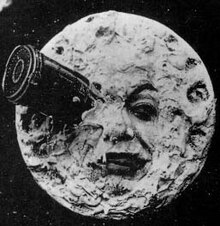
....a film called Hugo, which artfully tells the story of magician-turned-cinematographer Georges Méliès (following the Lumière brothers) and of a young boy who lives in the Gare Montparnasse.

It's a beautifully-made film with some stunning scenes which I'm sure would appeal to fellow bloggers. It has steam trains, clocks, engineering, projectors and lots of other boys' toys.

Wednesday, 7 December 2011

Gone aforagin' on the seashore

Ugh, it's awful dark in the mornings, and the pier's shut until 8am so work prevents a stroll along it.

However, along the coast at Kingsdown there's an opportunity for more scrumping..... seaweeds this time.

Nothing fancy, just a good clean, a snip and a stir-fry, with Sea Lettuce performing best while the red stuff (Dulse?) proved less tasty. Seved with a few focaccia courtesy of a North-west blogger, it was a good meal.


Bladder Rack and Tangle (or Kelp) are also edible but take a bit more cooking.


Sea Lettuce


On the landward side, Seaton gravel pits to be precise, it was good to see Hogweed in flower, with its unbalanced outer florets emphasising the delights within.
Down the stem was a Caddis fly.... not sure I've ever seen one before.

And continuing the food thread:- Jelly Ear.... very fresh, very jellyish, very bouncy, and ... quite tasty.
I do like to know where my next meal's coming from.