Friday, 31 August 2012

Once in a blue moon

Just once 
In a very blue moon

I watched the second full moon of the month rise out of the sea through the dark clouds.
Will it bring good luck?

Get well soon, if you can.

Saturday, 18 August 2012

Orlestone in the shade, and fun in the sun

Not complaining about the hot weather, especially since I live a stone's throw from the beach and the sea's lovely - but it's great to be in reach of shade in a cool forest sometimes.
Orlestone is a good place to be, as it has wide rides that are perfect for butterflies. And peacocks have emerged in profusion, feasting on knapweeds and hemp agrimony.


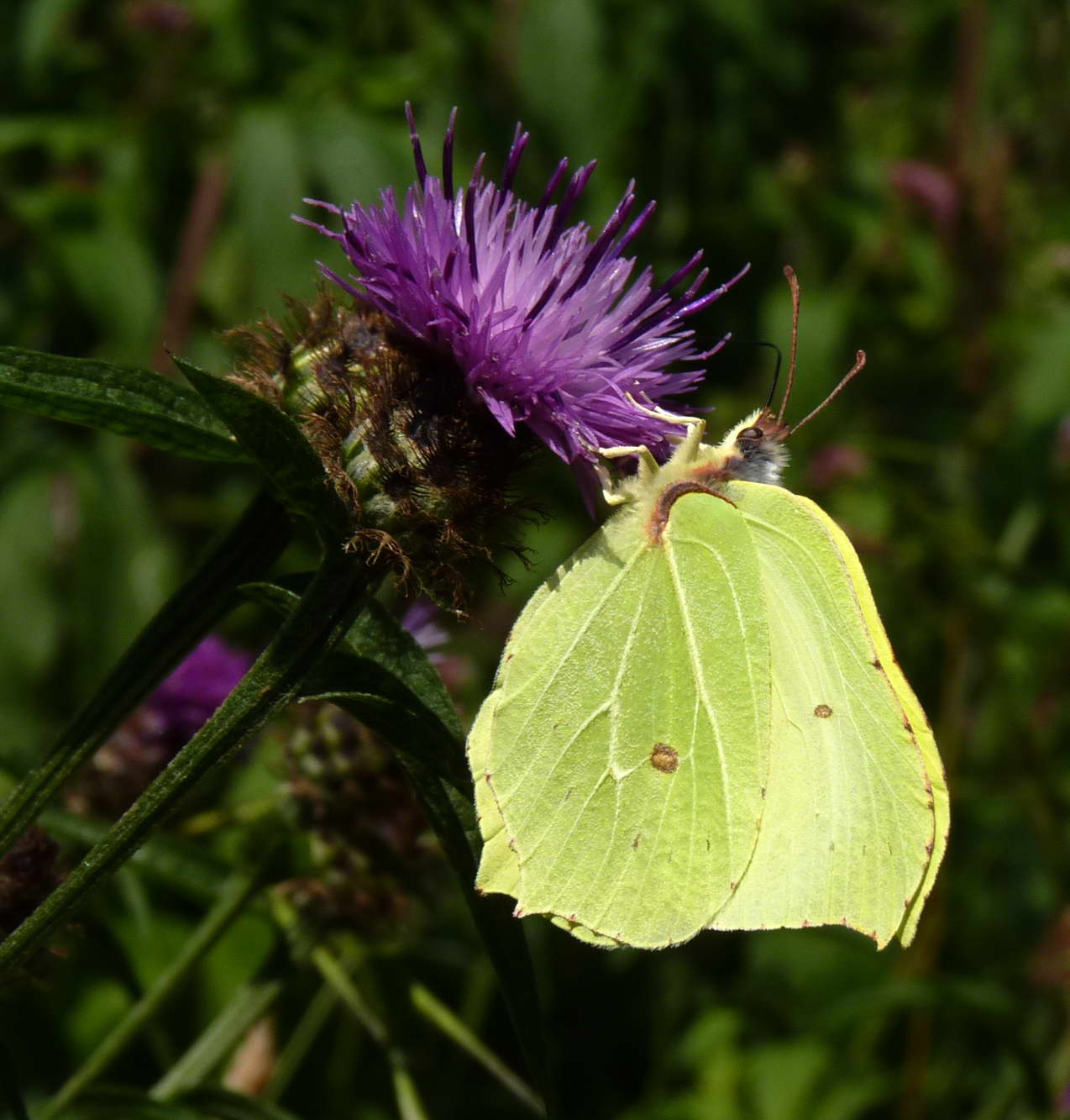
 A surprise was the large numbers of brimstones too, also on knapweed and ragwort but also (in the shade) on a swathe of betony.

Purple hairstreaks flitted about around the oaks, even descending reasonably low to give the closest views I've had (surprising to some readers perhaps, but there's not many oaks on the east coast and fewer purple hairstreaks). More obliging were white admirals, a fine compensation for the loss of purple emperors here.


 Nettle-leaved bellflowers are having a good year in the hedgerows around Hawkinge, lovely!

Another species doing well is the chalkhill blue, which was showing in relatively low numbers in the last two years, but are thriving this month. This web report on their numbers on the Friston Gallops near Eastbourne is worth a read, conservatively estimating numbers at around 800,000. I hope Lydden is doing as well.


 And finally,

there's a lot of good live music around locally at the moment, in the glorious sunny weather......
from the old (Kingsdown Band, and the Kinks) to the new (Gentlemen of Few), the stars on the rise (O'Hooley and Tidow) and some on the fall (sadly, Chumbawamba).    Dancing to folk music at ceilidhs, and to ska at Folkestone harbour -
 
 great stuff, catch it if you can.

Tuesday, 14 August 2012

Checking up on Kingsdown

By a series of curious events, I'm no longer representative of Kingsdown, having moved a couple of miles up the coast. The name Walmerer doesn't ring true, however, so until I get complaints I'll keep going, making sure that I make occasional covert forays into the parish to check up on the place.
The domain name will, however, be open to sensible offers (I'm thinking Facebook-value here).

The place remains much as I left it, with a good recurrence of butterflies along Otty Bottom. A few chalkhill blues posed on scabious, and a couple of small blues repeated their cousins' emergence in the usual sites.


Less expected was a pristine singleton, far from any apparent kidney vetch.

On top o't'hill the allotment has had a catastrophic year, slugs devouring anything planted or sown in the damp conditions. It's a real haven for wildlife with only the potatoes resisting the pests. The only thing growing up the runner bean stakes was bristly bloody ox-tongue!


Under the refugia lurk the usual suspects..... Norbert the lizard and one of the adult slow worms that have brought up a family of slivers.

The regular reader may recall that the allotment produced a few (rare) round-leaved fluellens. I left them to seed of course, and now my seed bed is a matted mass of the stuff - probaby more here than anywhere else in the country I'd guess.

A botanical trip to the rifle range was disturbed by a bit of excitement.....
a prawn catcher had got stranded by the rising tide and was calling for help.

The first of a series of calls to the coastguard scrambled the smaller lifeboat - calm and in control.

After an assessment of the situation, they edged towards the old walls and plucked Jamie from danger.
The tide rose another 4 feet or so in an hour.

Monday, 6 August 2012

Poppies to Pollies

There's been a mass of poppies this year, possibly because all the rain in the spring washed some of the herbicide away before it could do its work. The harvest looks good at the moment, though, as the sun came out nicely to ripen the corn. Unusually the oil-ssed rape and corn are being cut at the same time, meaning long hours for the contractors.

99.99999% of the poppies seem to be the common variety, but just occasionally a sharp eye might spot something different, generally from an unusual seedpod.


Last year I found a few rough poppies beside a crop near Maydensole and was pleased to see them again this year:
And this year an even sharper eye found prickly poppies on the road to Sandwich Bay......
..... near a line of long-headed poppies which are apparently more frequent than the above-mentioned, but it's still good to find them.
Apparently, prickly poppies have been found in Kingsdown, but where..........?    Nobody knows.

A brown hare has been nibbling around the fields nearby, apparently quite tame as it only makes the effort to lollop off when disturbed, no doubt delighting the longlenses who travel that road.
The little owl standing sentinel at the barn has now gone, after giving pleasure to many passers-by during the spring.


Other good sights in the Sandwich Bay area have been hundreds of southern marsh orchids in a depression between the sea wall and RCB golf course and a good show of marsh helleborines in the usual gully.  Sand catchflies were later but larger than usual, and a nice crop of 32 were seen beside a sandy track.
On an even smaller scale, a few plants of bur medick.


Wild clary was another plant to do well earlier in the year, while over at the point the Deptford pinks look strong, and each plant is accompanied by its count-tag - loads of them.

I look forward to hearing the score from KWT. I would guess there must be about 1,000 plants, while across the flatlands at Foulmead the grass-poly population has grown from about 110 last year to at least 500 now.

Saturday, 21 July 2012

No pics of Pic-mar in Picardie

 Another quick trip to the Somme estuary is search of foreign butterflies and Mediterranean heat was scotched by unrelenting cloud and cool winds. But never mind, always look on the bright side of life...... there were some interesting bugs in Crecy forest. Top prize goes to bee chafers, above, closely followed by the spectacularly iridescent chafers below.
 In the leaf mould, it was good to find wood crickets (a true cricket, I'm told).

 A few butterflies braved the weather, including some energetically mating white admirals, and a cool green-veined white.
 Floral highlights were limited to strange thistles, of which the lettuce thistle was the strangest, and a fine verge near Saillay Bray of poppies, corn marigolds and a host of other relicts.

 As for birds, well, we saw a middle-spotted woodpecker (pic-mar as the French would say) which flew off when it saw the camera, after reasonable views of it at the edge of the wood. Mel had seen one drinking at a pool earlier, but had not managed to convince me of the ID until we saw this one nearby.

A few marsh warblers gave loud song, but bluethroats were not going to be so easy.

Kittiwakes by the hundred were fledging in Bolougne harbour, on the ferry terminal.

Wednesday, 4 July 2012

Eel met by sunlight

On a rare warm evening, we did some rock-pooling at Kingsdown, followed by fish and chips in the setting sun. The tide was going out, leaving pools in the chalk platform and among the flint pebbles.

Streams of cold fresh water from the chalk hills flow from the shingle beach, and this had confused an eel that was trying to swim inland.
After a brief discussion on the principles of helping old ladies back across a busy road that they have just crossed (i.e. did the eel actually want to be helped?) it was decided to return it to the sea as otherwise it would have been stranded and left to the mercy of nearby herring gulls.


It's not easy to pick up an eel, by the way.


Browsing the usual Wiki-thing, I see that European eels are declining because of environmental factors, overconsumption and the introduction of parasites from farming stocks [that oft-repeated litany - sigh] and that IUCN have included them in their Red list.

From a personal point of view, I find their taste when jellied to be quite revolting and they may be reassured that I shall never touch them again.


Thanks guys!


There were also some starfish slowly slithering along in the shallows .....

..... and small dogfish dashed; whelks and winkles wandered, while sea anemones ...um... angled for food?     

Lovely evening.     Do not take living by the sea for granted.

Monday, 2 July 2012

Wot, no flies to catch?

We visited the three sites where spotted flycatchers have been known to breed in the area, but only one pair was found. More evidence of population crash, as these lovely birds are hard to find these days.
 
 There's precious little for them to feed their chicks this year as the weather has been cool, damp and decidedly unclement for insects. The records tell us that we've had the wettest (on average across the country) late spring/early summer and to that can be added an almost constant cool north-easterly wind in this corner of the country, so the long-term trends that have done for so much of the insect life have been reinforced by short-term damage.
A comment that I've heard frequently recently is "when was the last time you had to scrape insects off the windscreen?". Perhaps modern cars' improved Cd designs have an effect, but the numbers of insects that peppered our car in the seventies are absent now. How do the birds and other animals that depend on the seasonal harvest of flying protein cope when it doesn't appear?
Or even the plants that need them for pollination?
 I assume that Nottingham catchfly does not feed off the insects that get stuck to its stems, but it may be sticky to stop them crawling up to eat the flowers or drink the nectar, which is to attract nightflying moths. 
Whatever, the swathes of catchfly that grew on Dover cliffs last year have not reappeared, with only a sparse and short-lived growth this year.

While musing on the lack of insects while cycling along Walmer seafront this evening, we were assailed by an emergence of summer chafers, cruising and crashing around hedges and bushes along the path with their languid droning buzz. We saw a couple of hundred in a short distance, many bumping into us and catching in our hair. Examining one more closely, we could see that they have small eyes which seem to serve them poorly.

Elsewhere, an energetic grey wagtail was feeding on insects above a waterfall by Leeds Castle..... did you know that you can walk around the grounds on public footpaths after the paying punters have gone home? Idyllic.


 And near there, at The Larches...... at last I've seen my first ground-pine. And then another 80 were found, equally tiny. 
A gorgeous little plant which has eluded me for a while, probably because I've also got small eyes that serve me poorly.